







- HOME
- About Regenerative Medicine
- What is Regenerative Medicine?
What is Regenerative Medicine?
Regenerative medicine is a treatment method that uses the "regenerative power" that humans possess to restore tissues, organs, and cells that have suffered functional impairment due to injury or disease.
Specifically, it repairs and regenerates lost tissues, functions, etc. by enhancing the body's natural healing ability. This regenerative medicine is the latest treatment method that takes advantage of the body's amazing ability to heal itself.

The human body is built from
cells
Human life begins when a sperm and an egg unite to form a fertilized egg. This fertilized egg repeats cell division to form muscles, nerves, skin, bones, and various other parts of the body, taking approximately 280 days to form the human form.
Thus, the human body begins with a single cell. The human body is composed of approximately 60 trillion cells, and old cells are constantly being replaced by new ones in order to maintain vital activity. Not only humans, but all living things are made up of a collection of cells starting from a single cell.


Transformable! Chameleon-like transformations
Amazing cells that play a wide range of roles
In the human body, there are cells that, like a fertilized egg, can carry out a variety of functions. These special cells are called "stem cells".
Stem cells are normally inactive, but when there is damage to cells or a reduction in their number, they divide on their own to replace damaged or missing cells, playing a role in repairing bodily functions.
In regenerative medicine, the repairing power of these stem cells is used for treatment.


Features of Regenerative Medicine Using Stem Cells
One of the key characteristics of stem cells is their “differentiation potential.”. Differentiation potential refers to the ability to change into cells of various tissues, such as red blood cells, skin, cartilage, etc.
Stem cells have the ability to repair damaged or weakened cells. This treatment method enhances the self-repairing ability of these stem cells and works on worn cartilage and organs that have lost their original function, thereby restoring bodily functions.
In other words, it promotes repair in areas that are difficult to heal through rest or nutrition alone, by using the patient's own cells.


Using the patient's own cells
Highly safe treatment
The regenerative medicine performed at our clinic is called “autologous adipose-derived stem cell therapy”. In this therapy, stem cells are first collected from the patient’s body, cultured outside the body, and then returned to the patient’s body after they have grown to a specified amount.
Because the stem cells returned to the body are the patient's own cells, rejection and allergic reactions are unlikely, making this technology highly safe.
Autologous adipose-derived stem cell therapy is the latest medical technology that is attracting the most attention, with research being conducted worldwide. This therapy is expected to maximize the body’s self-repair ability and treat a variety of medical conditions.

 POINT
POINT
Stem cells are found in a variety of locations, including bone marrow, umbilical cord blood, and visceral organs as well as fat. At our clinic, stem cells are harvested from abdominal fat to reduce the burden on the patient's body.
Diseases for which studies to date have shown
benefits from stem cell therapy
-
vascular disease
Ischemia of the lower extremities such as cerebral infarction, myocardial infarction, early-stage renal failure, early-stage dementia, diabetes mellitus, and all other diseases caused by damage to blood vessels
-
nerve disease
Childhood paralysis, stroke, dementia, Parkinson's disease, etc.
-
Cartilage and bone diseases
Osteoarthritis, rheumatism, etc.
-
Other Diseases
Diabetes, immune disorders (intractable collagen diseases), liver diseases, asthma, etc.
-
preventive effect
Whole-body rejuvenation, disease prevention, etc.
CULTURE TECHNOLOGY AT CPC
The key to autologous adipose-derived stem cell therapy cell culture technology.Stem cells are cultured at a CPC (cell culture and processing center). Culture technology is extremely important because the stem cells returned to the body must be alive to be effective.
What is PRP (platelet-rich plasma) therapy?
Regenerative medicine is classified into "Type 1 Regenerative Medicine, etc.," "Type 2 Regenerative Medicine, etc.," and "Type 3 Regenerative Medicine, etc." according to risk. Of these, "Type 2 Regenerative Medicine, etc." and "Type 3 Regenerative Medicine, etc." are technologies with low risk and high safety.
The stem cell-based regenerative medicine described above falls under "Type 2 Regenerative Medicine, etc.".
PRP (platelet-rich plasma) therapy, which is currently used in the treatment of professional athletes and at many medical institutions, falls under "Type 2 Regenerative Medicine, etc." and "Type 3 Regenerative Medicine, etc." PRP therapy uses components extracted from the patient’s own blood and does not involve cell culturing.


Treatment is a 3-step process!
Treatment can be done in one day!
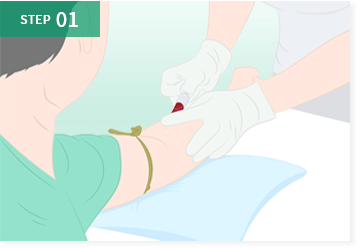
Your blood is drawn.

The collected blood is centrifuged and
plasma components are extracted.

The high-concentration plasma component is injected into the affected area.
Safety and Security
- It is expected to suppress inflammation in the affected area and alleviate pain.
- The cost is lower than that of stem cell therapy.
- Treatment can be done as an outpatient (day treatment).
Areas that can be handled at our clinic
- local injection
- intra-articular injection
Repair Cell Clinic can provide
regenerative medicine
Our clinic has submitted Type 2 and Type 3 regenerative medicine provision plans to the Ministry of Health, Labour and Welfare, which have been accepted.
Regenerative medicine can only be used to treat diseases for which notification has been submitted.
Name of medical practice and disease for which Repair Cell Clinic is registered at
 medical practice medical practice |
 name of the disease name of the disease
|
|---|---|
Type 2] Intravenous injection (intravenous drip)
|
cerebral infarction Diabetes mellitus Liver disease Spinal cord injury Hernia |
Type 2] Injection into joints
|
Osteoarthritis of the knee Osteoarthritis of the hip joint Meniscus injuries Shoulder joint periarthritis Other Arthritis |
Type 2] Intraspinal injection
|
Spinal cord injury hernia |
Type 2] Injection into the face
|
Skin Regeneration Medicine |
Type 3] Local injection
|
Skin Regeneration Medicine Ligament and tendon injuries Fracture of the flesh Plantar fasciitis, etc. |
