



- HOME
- About Regenerative Medicine
- What is the next generation of regenerative medicine ?
-

First in Japan! Regenerative Medicine is
Joint Therapy in the Era of Inducing Differentiation -

Maximum dose of 200 million
stem cells potential infusion therapy!


First in Japan! What is the next generation of regenerative medicine? "Regenerative therapy through differentiation induction (stem cell therapy)" is designed to intensively regenerate damaged tissues.
Why Choose Our Clinic?
The secret lies in the power of our stem cells.
We’ll explain the details of our exclusive cell culture technology that makes it possible.
A New Stage of Stem Cell Therapy (1)
Regenerative Medicine Enters the Era of Differentiation Inductio|Joint Therapy
Regenerative medicine using differentiation induction enables more extensive repair of articular cartilage, meniscus, and osteonecrotic areas.
Delivering what is needed where it is needed (differentiation induction) "Next Generation Regenerative Medicine".
Differentiation induction is the induction of "stem cells" that are administered to the area of the body that is damaged and needs treatment. It is an advanced technology that actively guides stem cells to the tissue requiring treatment.
It was said that regenerative medicine using stem cells would eventually evolve to "differentiation induction. This is because regenerative medicine for joints using differentiation induction will be able to provide treatment with a higher regenerative capacity than conventional regenerative medicine (stem cell therapy).

Repair Cell Clinic was the first in Japan to use differentiation induction to "treat arthritis using autologous adipose-derived stem cells and autologous preosteoblast differentiation induction supernatant solution," and the Ministry of Health, Labour and Welfare accepted our notification.
As a result, it is possible to repair more articular cartilage, meniscus, and osteonecrotic areas, and it is expected to be highly effective in treating osteoarthritis of the knee, osteoarthritis of the hip joint, meniscus injury, osteonecrosis of the femoral head, and osteonecrosis of the knee joint.

Highly effective treatment
Symptoms to expect
- osteoarthritis of the knee
- Osteoarthritis of the hip
- Meniscus injury
- osteonecrosis of the femoral head
- Osteonecrosis of the knee joint


Advanced medicine, induction of stem cell differentiation
- It was accepted by the Ministry of Health, Labor and Welfare for the first time in Japan.
- Technology to deliver stem cells to weakened areas in need of treatment
- Greater effect on regeneration of articular cartilage, meniscus, osteonecrotic areas, etc.
A New Stage of Stem Cell Therapy
The Next Generation of Regenerative Medicine for Joints by Differentiation Induction
In our body, there are "stem cells," that can change into various forms like a fertilized egg.
For example, it can transform itself into nerves, blood vessels, bones, blood, muscles, etc.
This ability to transform is called differentiation..
I see that stem cells can differentiate into various tissues such as nerves, blood vessels, bone, blood, muscle, etc.
Stem cell differentiation


The process of guiding stem cells that change into various forms to differentiate into specific tissues such as bones and nerves is called "induction of differentiation.
By inducing differentiation, the administered stem cells can be fully utilized, thereby increasing the regenerative capacity of the targeted tissue.
By inducing stem cells to differentiate into
specific tissues, such as nerve or bone, you can increase the regenerative capacity of the
tissue you want to repair!
Induction of stem cell differentiation


Safety and Security
In this differentiation induction process, we do not use any chemical substances or manipulate genes. We use the power of our own cells, so you can receive our treatment with peace of mind.
regenerative medicine for joints by induction of differentiation
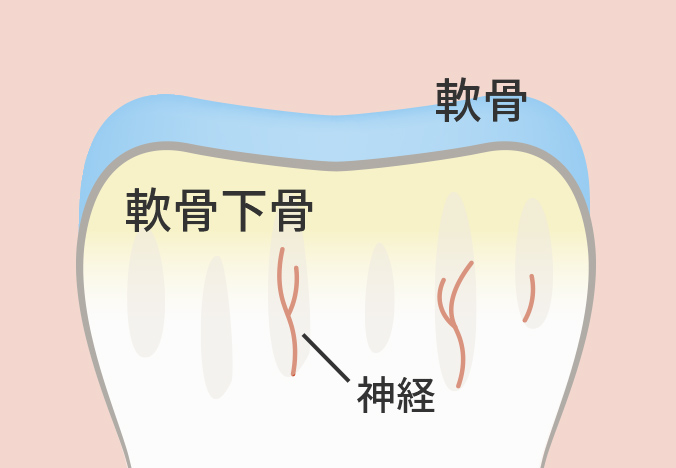
The cartilage of the joints has a foundation, which is called the subchondral bone (nankotsukakotsu).
By differentiating and inducing stem cells in this subchondral bone, it is now possible to prepare the foundation and generate a lot of cartilage on top of it, and also to maximize the effect on pain.
In order to regenerate cartilage in the joints, it is important to prepare the "subchondral bone,"
which is the foundation of the cartilage?


Osteoarthritis|Mechanism of joint pain
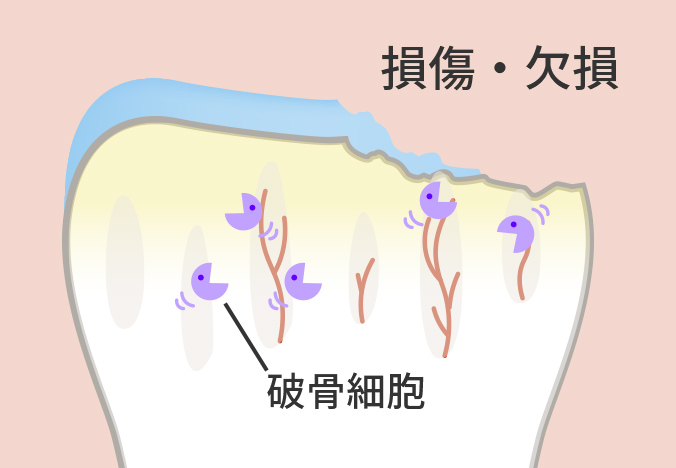
How does the pain of osteoarthritis of the knee or hip joint appear? It is only when the cartilage wears away and the bone beneath that cartilage is damaged that pain appears.
In the first place, the cartilage itself does not feel pain because no nerves exist in the cartilage itself. However, the subchondral bone is innervated. Therefore, when the cartilage wears away, the underlying subchondral bone is damaged, causing pain.
This means that damage to this subchondral bone is very much a major cause of joint pain.
Progression of knee osteoarthritis
-

Normal to mild disease
-
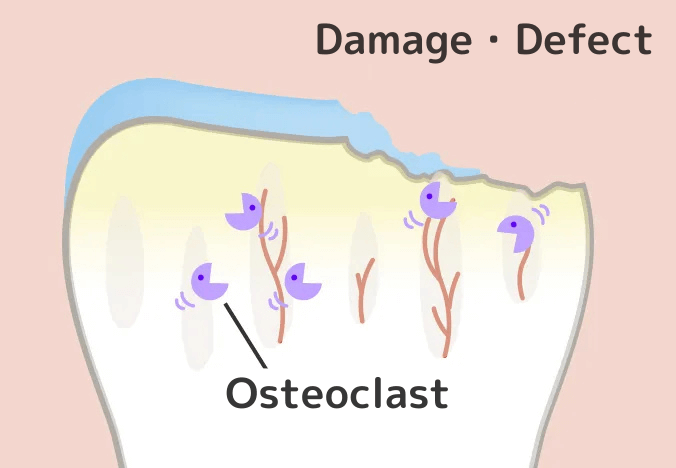
moderate disease
-
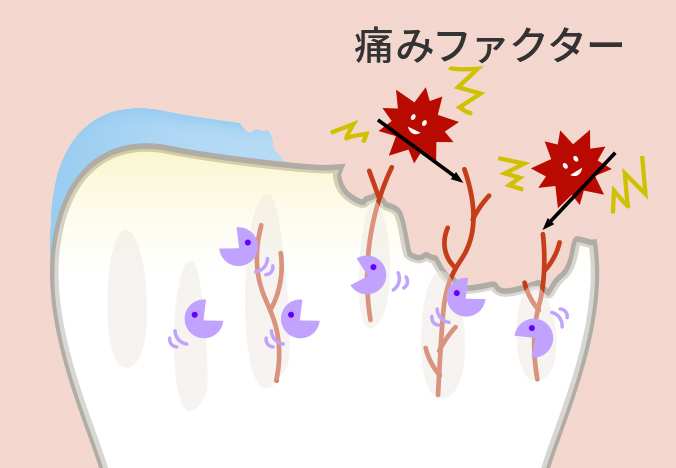
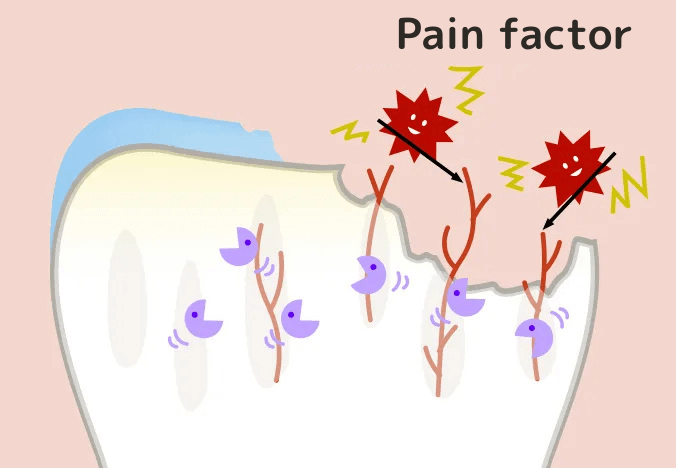
serious illness


This subchondral bone plays an important role as the foundation for cartilage production. If the subchondral bone is damaged or missing, it will be difficult to regenerate cartilage as expected, no matter how many stem cells are administered during stem cell therapy.
Another advantage of differentiation-guided joint therapy is that it can suppress pain-causing substances in the joints 20 to 30 times more effectively than conventional stem cell treatments.
Why is regeneration of the subchondral bone (foundation) necessary for cartilage regeneration?
For the sake of clarity, let's compare this to the relationship between the soil in a field and its yield. The larger the area of soil (subchondral bone) in the field, the larger the crop (cartilage) yield will be. Also, crops will not grow where there is no soil.
The same is true for the regeneration of cartilage in joints. If the subchondral bone (soil), the foundation of cartilage, is not regenerated, then cartilage will not regenerate on top of it.
In other words, regenerating as much subchondral bone as possible determines the amount of cartilage that is regenerated on top of that foundation.


In conventional stem cell therapy, only a fraction of the stem cells administered into the joint are used to regenerate subchondral bone and cartilage.
Therefore, the next-generation " Joint Regenerative Medicineby Differentiation Induction” guides stem cells to differentiate so that they regenerate a large amount of subchondral bone, the foundation of cartilage.
If a lot of subchondral bone is regenerated in this way, more cartilage can be regenerated than with conventional regenerative medicine.

The clinic offers
free consultations.

- Treatment methods and results
- Unique stem cell therapy technology
- Safety and risks
- Treatment plans and pricing

 0120-706-313
Toll free/ Office hours: 9:00-18:00
0120-706-313
Toll free/ Office hours: 9:00-18:00
A New Stage of Stem Cell Therapy (2)
Maximum number administered!
200 million stem cells at a time
possible|Infusion therapy
Stem cells focus on "quality"!
Stem cell therapy should be chosen for "quality and quantity"
Here's why.
The Dosage of Stem Cell Therapy
For regenerative medicine (stem cell therapy) for stroke, diabetes, liver, and chronic pain, we administer (intravenous infusion) 200 million stem cells, twice as many as the 100 million cells generally administered in regenerative medicine.
This treatment is possible only after advanced culture technology capable of culturing up to 200 million stem cells and notification to and acceptance by the Ministry of Health, Labor and Welfare.

- Where 100 million stem cells are commonly administered, we have achieved the administration of "200 million" stem cells (intravenous infusion).
- The advanced culture technology that can increase the number of doses up to 200 million and the notification to the Ministry of Health, Labor and Welfare have been accepted.


The higher the dose of stem cells, the more therapeutic
effect is expected, so the higher the dose, the more
results are directly related to the outcome.
What couldn't be improved by 100 million,
can be improved by administering 200 million at a time
.
With 200 million cells, the treatment is
more effective than conventional treatments
Scrollable
| Our Stem Cell Therapy | General Stem Cell Therapy | ||
|---|---|---|---|
| treatment | Adipose stem cells ・Cultured without freezing ・Fresh alive |
Fat Stem Cells Freeze |
Bone Marrow Stem Cells Freeze |
| feature | Cultured without freezing ・High survival rate ・High activity rate |
Because of cryopreservation low survival and activity rates |
Because of cryopreservation low survival and activity rates |
| Number of doses | 200 million pieces | ~100 million pieces | ~100 million pieces |
| Expected Benefits |
 What could not be improved by 100 million |
 |
 |
| About Treatment | Almost painless | Almost painless | Pain associated with spinal tap Bone marrow infection concern |
| hospitalization | not required | not required | Sometimes hospitalization is necessary |
The Quality of Stem Cell Therapy
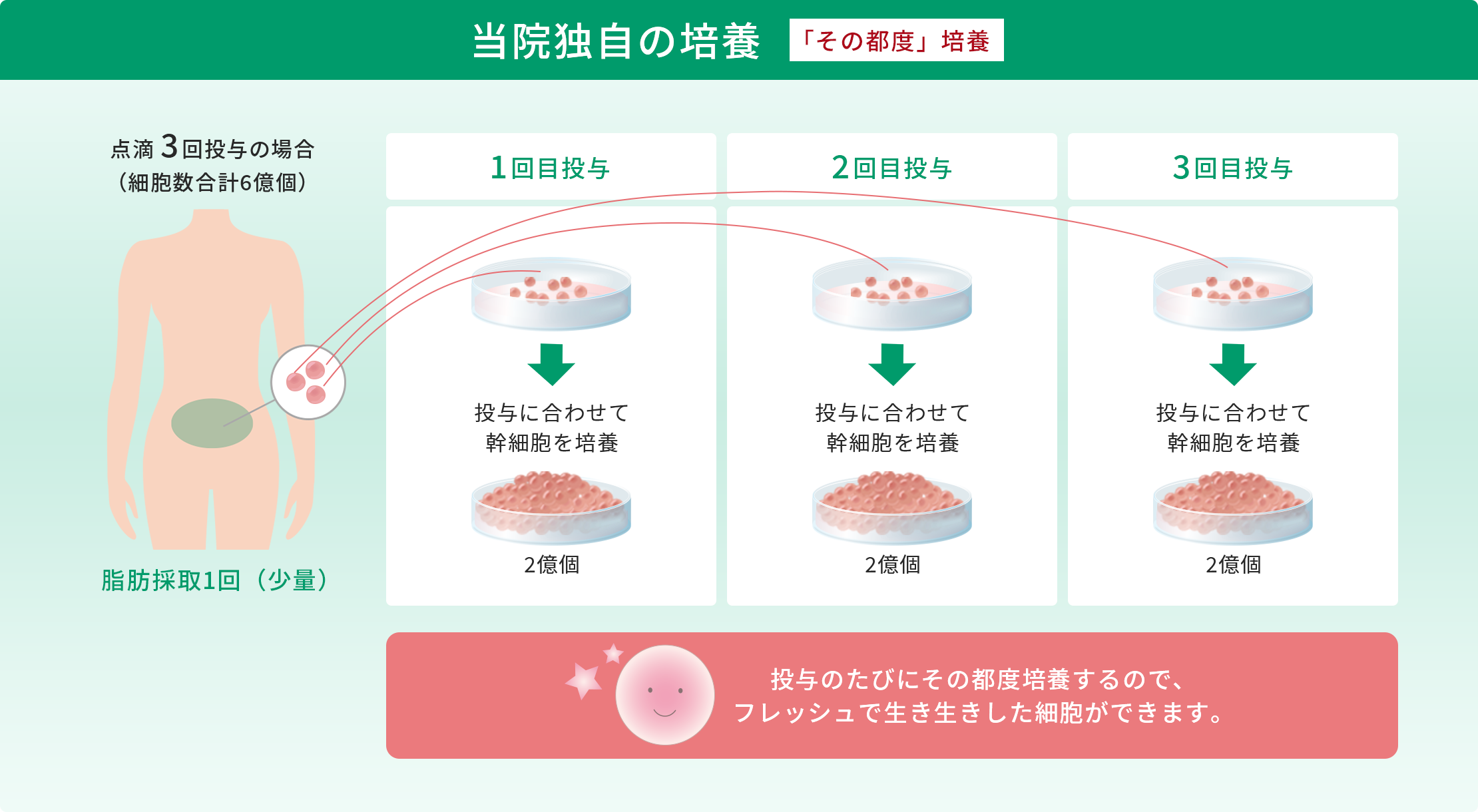
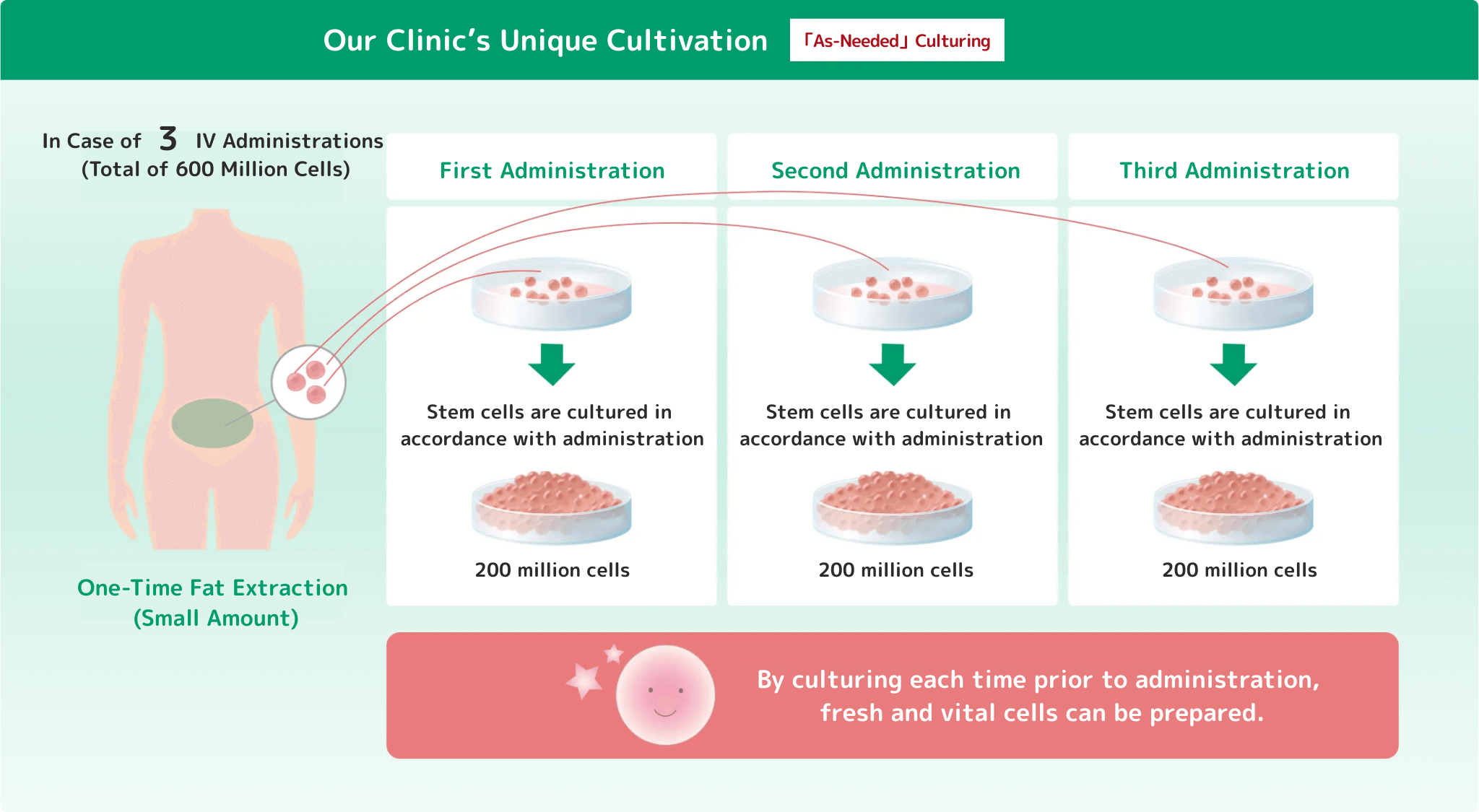
Our stem cells are cultured without freezing using the latest large CPC (cell processing chamber) culture technology, so freshly cultured stem cells are used each time they are administered.
By culturing without freezing, we are able to administer stem cells with a "high survival rate" and "high activity rate".

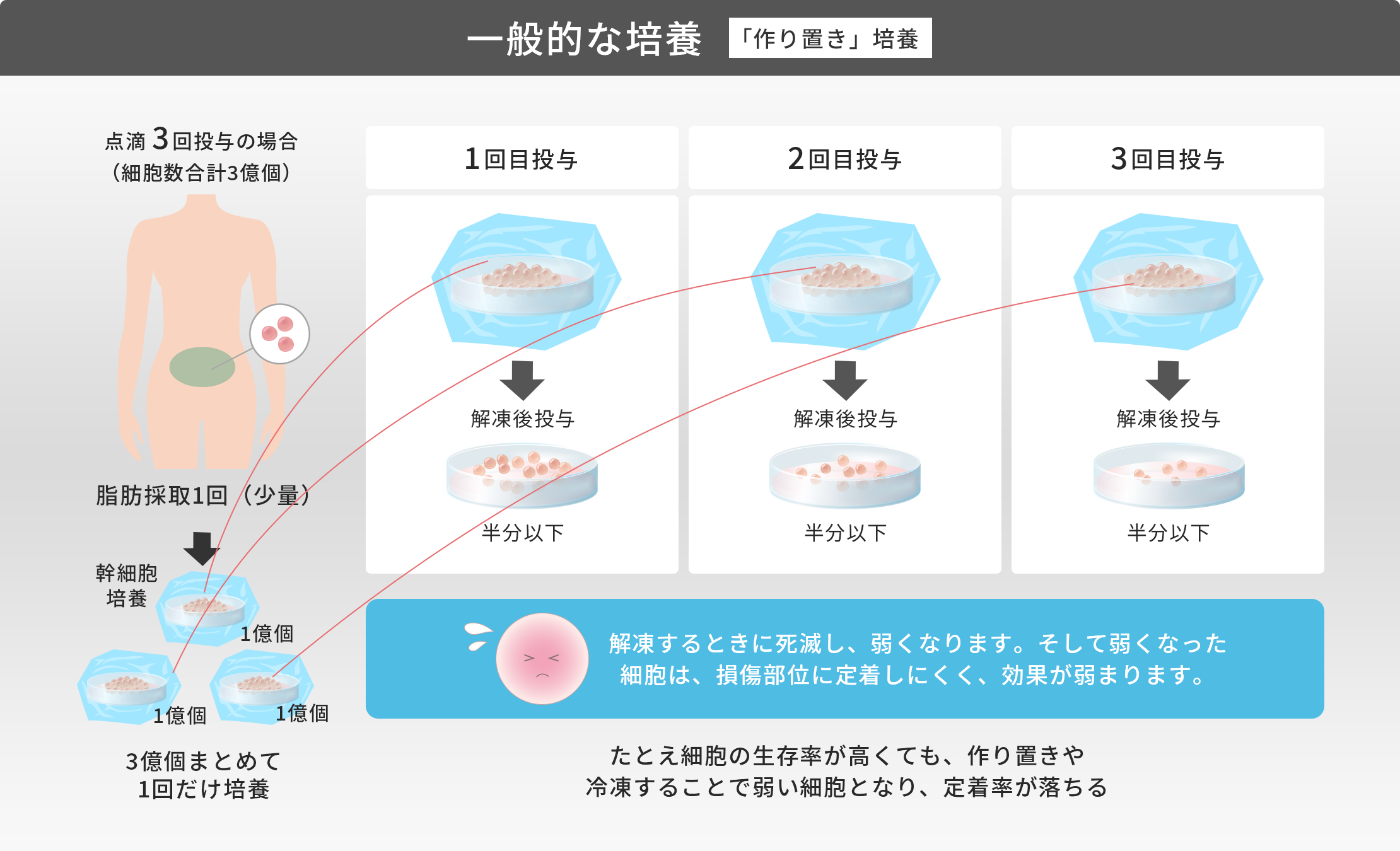
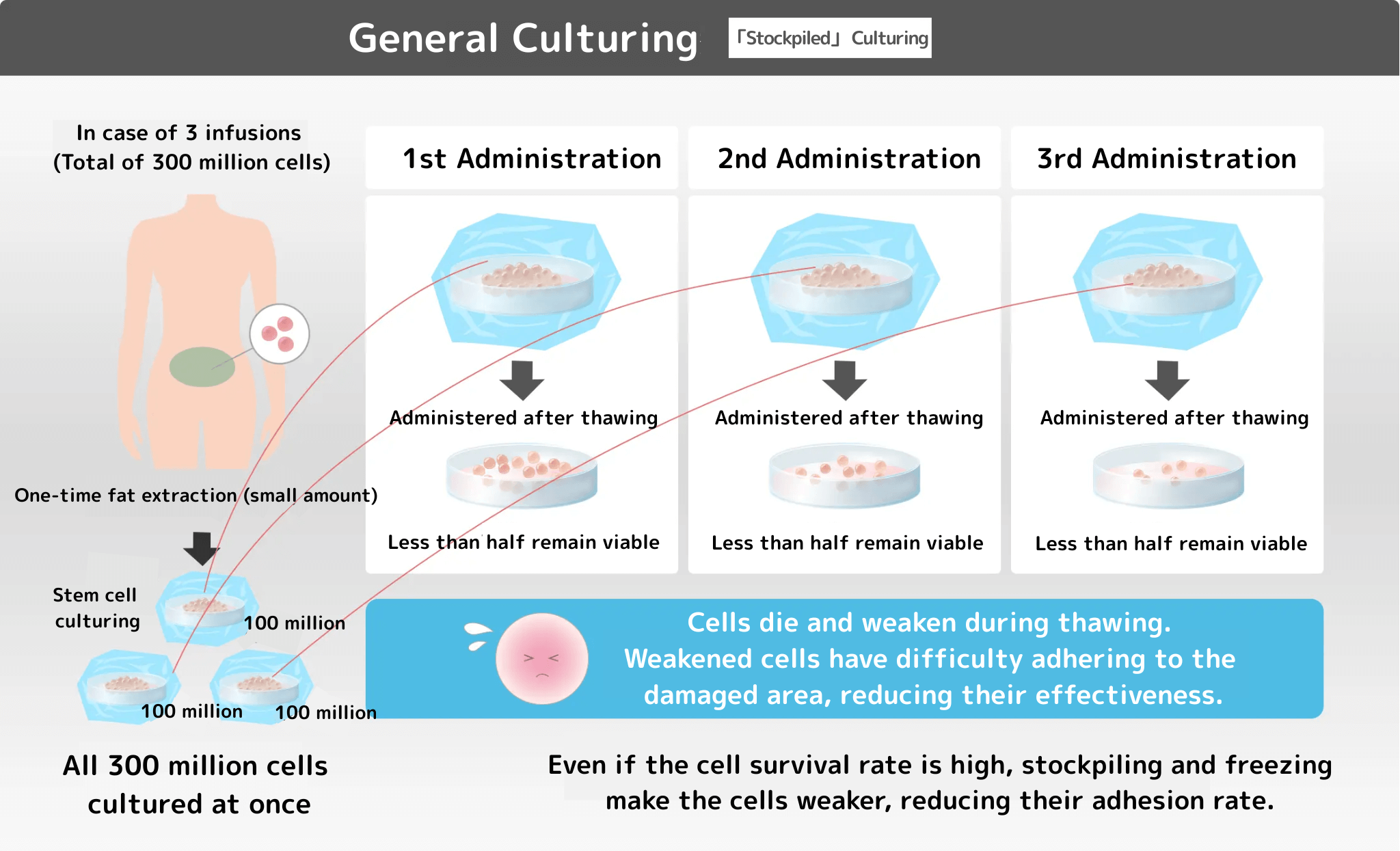
A typical CPC (cell processing chamber) is "frozen after incubation and thawed just before administration."
In the case of general CPC, using three doses as an example, three doses are cultured from the beginning and all are frozen and stored. In other words, the culture is thawed each time it is administered. Compared to our original method of culturing stem cells each time they are administered without freezing, the general method of CPC results in the death and decrease of stem cells when thawed at the time of administration.
Furthermore, the longer the second and third doses are administered, the longer the freezing period, the lower the quality of the cells. Stem cells also die.


Each time we administer: culture (not frozen after culture)
Even in the same stem cell therapy, stem cells cultured without being frozen are fresher and have a higher "survival rate" and also have a higher "activity rate" to become active and vigorous after administration, resulting in a higher retention rate. In addition, since stem cells are cultured each time they are administered, the optimal condition of stem cells can be provided according to the patient's condition, and the therapeutic effect can be expected to be further enhanced.
Please note that there is a big difference in the "quality of stem cells" administered, even though they have the same name, stem cell therapy. There is a possibility that you may not see the desired effect.
*We recommend that you choose regenerative medicine (stem cell therapy) based on the quality of the cells.


Why you should choose stem cells by quality
Scrollable
| Our Stem Cell Therapy | General Stem Cell Therapy | ||
|---|---|---|---|
| culture | each time as it is administered. | Cultured in batches and stored frozen | |
| prescribing medicine | Administration of fresh stem cells | Thawed from frozen and administered | |
Our 200 million stem cell therapy
100 million stem cell treatments in common culture methods